Brand and web for the University of Otago
University of Otago · Curriculum Insights · NMSSA · EARU · Brand · Website · Editorial · 2021–Present
A five-year brand, website and editorial partnership with the University of Otago — designing Curriculum Insights, NMSSA and the EARU national reporting system that informs the Ministry of Education on how the New Zealand Curriculum is landing in classrooms.
5+ yrs
retained partnership across NMSSA, EARU & Curriculum Insights
160
schools reached annually by the national study
6,000+
ākonga involved across the study each cycle
Ministry
of Education + NZCER reporting partnership
Thanks for your design skills, and for being so responsive and so easy to work with — it really does feel like you are part of our team.Dr Jenny Ward — Project Lead, Curriculum Insights and Progress Study, University of Otago
The University of Otago is one of New Zealand’s oldest and most considered tertiary institutions. Inside its College of Education, the Educational Assessment Research Unit (EARU) runs the country’s national assessment of student achievement against the New Zealand Curriculum — a study that visits around 160 schools and works with more than 6,000 ākonga every year, on contract to the Ministry of Education in partnership with NZCER.
Today it’s known as Curriculum Insights and Progress Study. It is the latest version of NMSSA (the National Monitoring Study of Student Achievement, 2011–2022) and NEMP (the National Education Monitoring Project, 1995–2010) before it. Obvious has been the design partner for the study since 2021. Across five years and four named phases — NMSSA brand and website, the EARU reporting system, the 2025 Curriculum Insights rebrand, and the ongoing publishing retainer — the engagement has compounded into one of the longest-running partnerships in our studio.
The brief that didn’t end
In 2021, Dr Jenny Ward and her team at the University of Otago came to Obvious with a defined ask: rebuild the NMSSA website so it could keep pace with the study’s national role. NMSSA is the long-running assessment that tells the Ministry of Education how the New Zealand Curriculum is actually landing in classrooms. The website is the front door for everyone who relies on that work — teachers, principals, researchers, whānau, policymakers and the media.
That single project never really wrapped. Five years on, the relationship spans brand identity, a content-managed website, a national reporting system, an identity refresh for the study’s new chapter, and the ongoing design work that keeps it all current.
Building the foundation — NMSSA brand & website
We started where any good rebuild starts — with a discovery workshop. The NMSSA team is unusual for an assessment study: their philosophy is that assessment should do no harm, that it should be stimulating and even enjoyable for the students taking part. Ākonga who do NMSSA tasks tend to want to do them again the next year. That posture — rigorous and warm at the same time — was the thread we pulled through the brand work.
Over the following months we delivered a refreshed identity: a vertical and horizontal logo system anchored by NMSSA’s toetoe brandmark, a primary palette of teals offset by a warm orange accent, a dedicated curriculum-area palette so every learning area got its own colour, and brand guidelines built to be useful for non-designers on the team. The toetoe became a flexible graphic asset in its own right — scaled, cropped, recoloured and broken into individual fronds for use across reports, slides and digital.
The website itself was rebuilt on Wagtail, with a Streamfield-based content layout so the NMSSA team could mix and match branded content blocks without going near a developer. Information architecture was redesigned around the two real reasons people came to the site — finding out what NMSSA was, and getting hold of the reports and resources. Login functionality was added for participating schools, alongside an SEO and accessibility pass, email subscription, blog tooling, and a full content migration from the old site.
A coordinated national reporting system
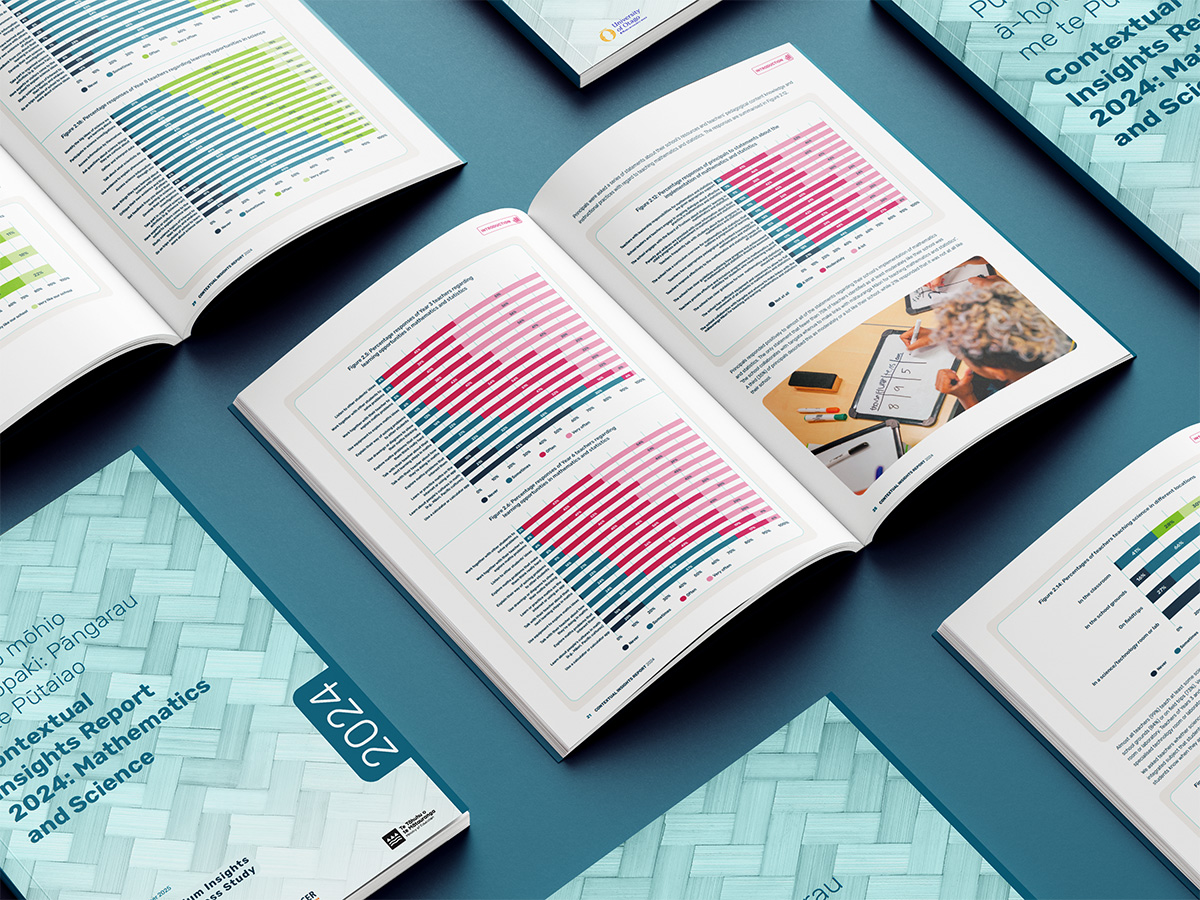
With the brand and site in place, the conversation moved to what NMSSA actually publishes. Every year, the team generates a sprawling family of artefacts on contract to the Ministry of Education — dashboard reports for school leaders, online data windows, exemplars for teachers, contextual insights reports, statistical modelling reports, technical reports, and a stream of Insights for Teachers pieces. The volume is real. So is the scrutiny.
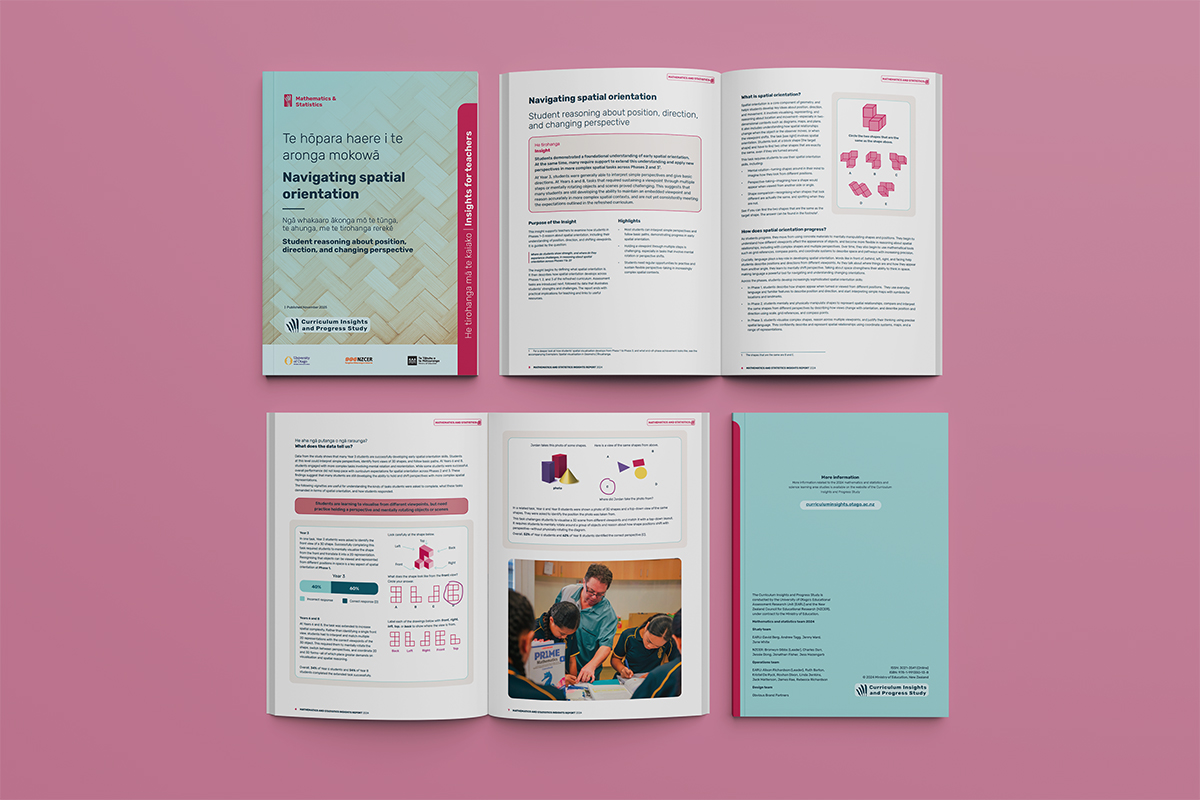
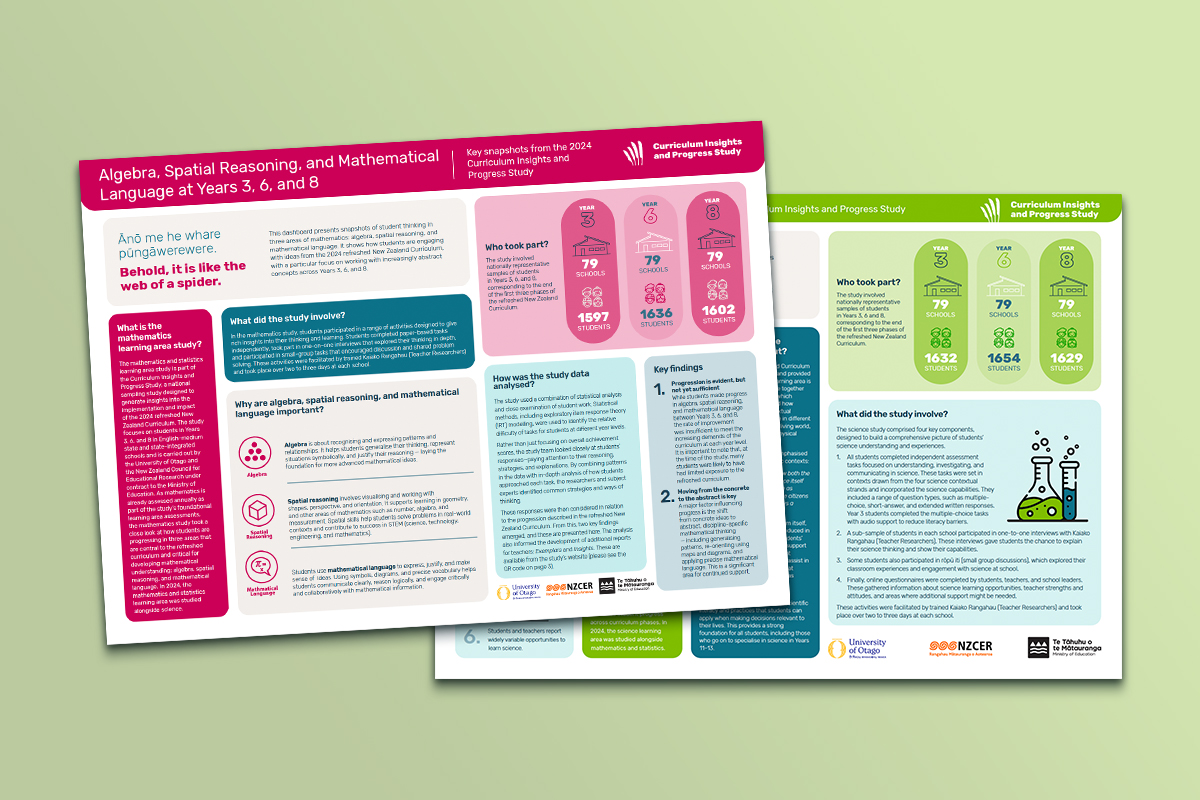
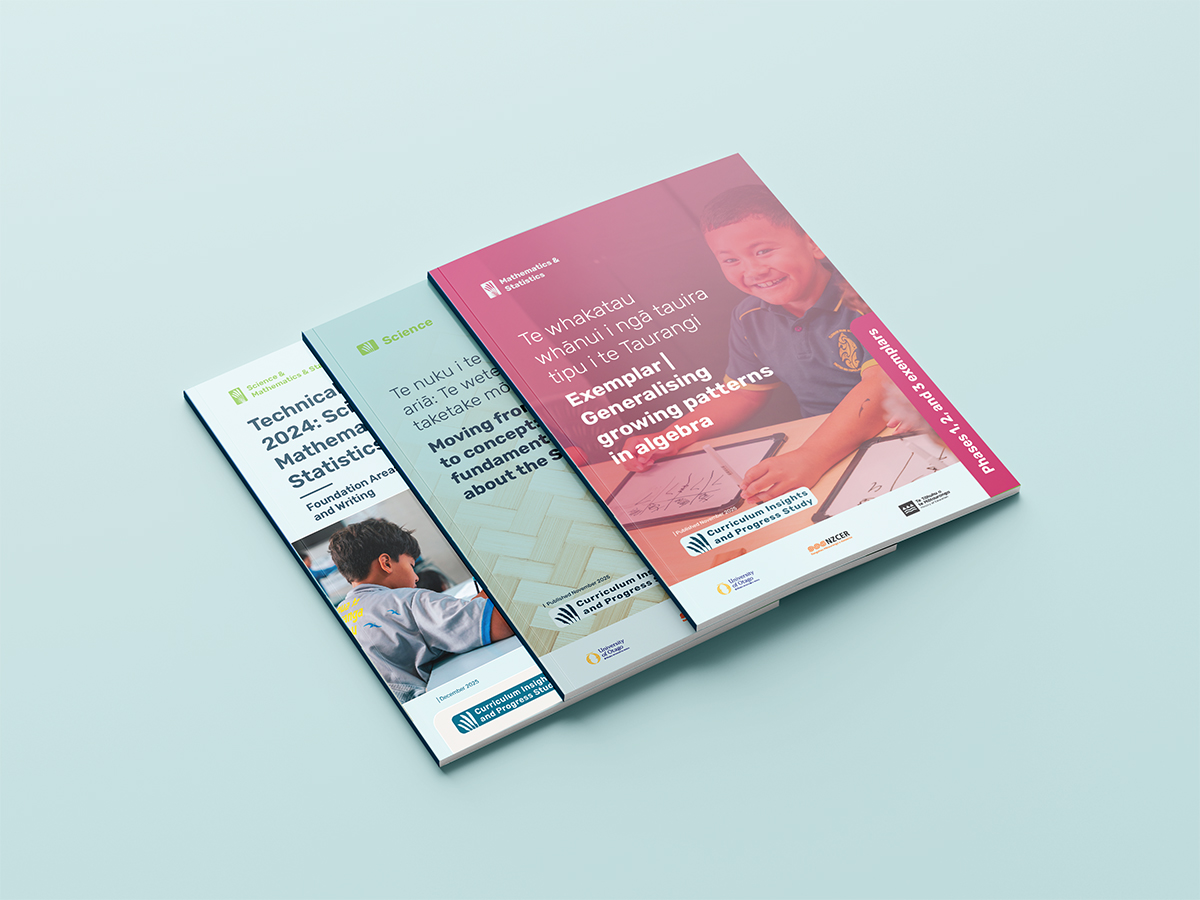
Across 2024 we designed a coordinated system to carry all of it. A flexible A3 dashboard template for Reading, Numeracy, Social Sciences and English; an editorial system for the long-form contextual insights report; A4 PDF pamphlets for the teacher-facing pieces; consultation on the interactive data windows being built by NZCER’s Shiny developers; and a refreshed logo to sit at the top of every cover as the study transitioned from NMSSA into Curriculum Insights.
The whole system was built so the EARU team could keep producing on rhythm — the Ministry deadlines don’t move — without losing the visual coherence that makes the reports recognisably part of one body of work.
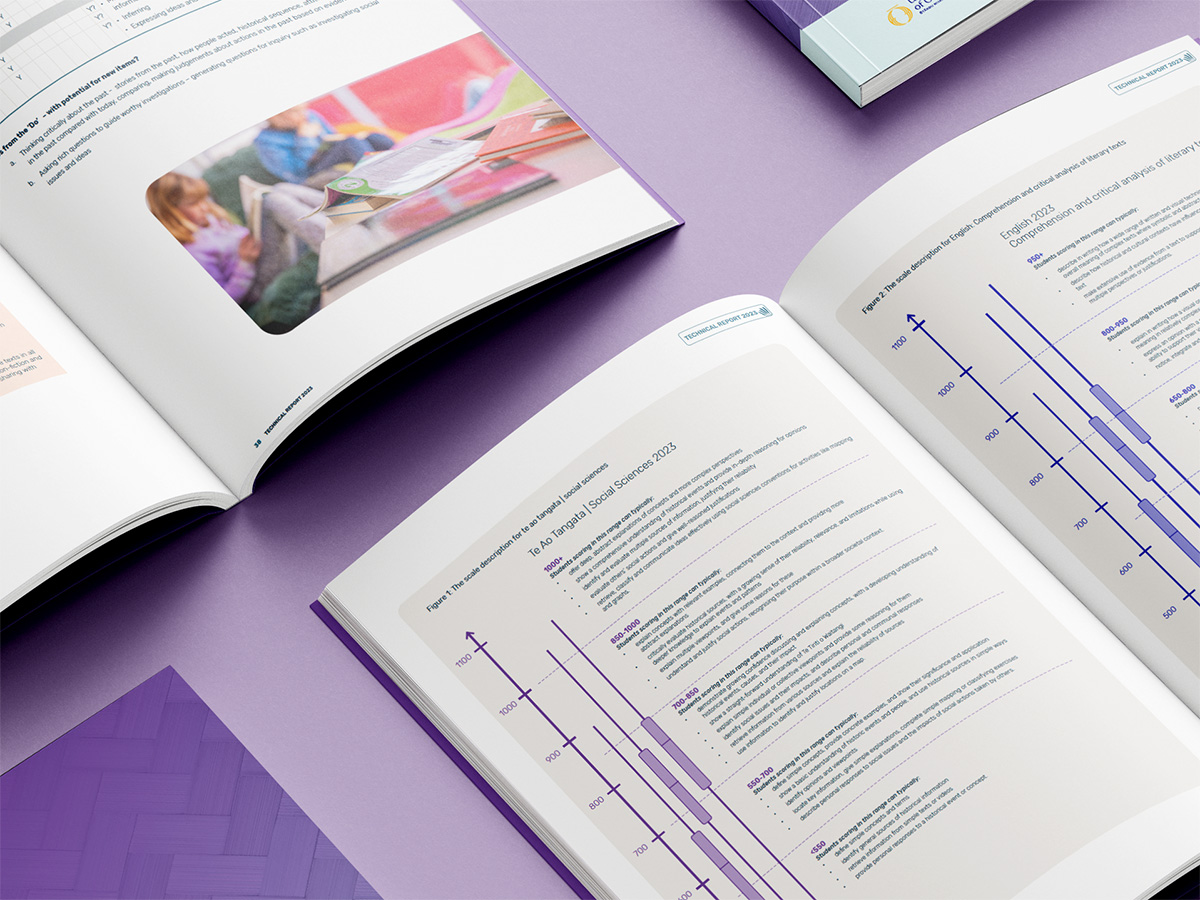
- Dashboard reports — multi-page A3 templates covering Maths, Reading, Writing, English and Social Sciences across Year 3, 6 and 8.
- Insights for Teachers — A4 PDF pamphlets that translate study findings into classroom-ready suggestions.
- Contextual insights — long-form editorial reports, 60+ pages each, analysing the contextual factors that shape achievement.
- Exemplars — A3 PDFs showing assessment tasks alongside annotated student responses for teacher use.
A new chapter — rebranding for Curriculum Insights
In 2025 the study moved into a new phase. It’s the latest evolution of a lineage that runs from NEMP (1995–2010) through NMSSA (2011–2022), and the team needed a brand that could carry the work forward under a new name — Curriculum Insights and Progress Study — while still honouring everything NMSSA had built up over a decade at the University of Otago.
We worked closely with the EARU team on a refresh rather than a rebuild. The toetoe at the heart of the NMSSA identity stayed; the colour system, type and tone evolved. Working from the brief developed with the team’s Kaihautu Māori, we produced a refreshed tohu, a kōwhaiwhai patterned strip drawn from the existing toetoe brandmark, and a set of supporting graphic elements. The patternwork incorporates elements of toetoe bundles, kākaho and kaho tarai, with niho taniwha triangles symbolising the passing of knowledge. Each piece came with a written rationale so the team could speak to why every element exists.
Once the visual language was settled, we took it through to the digital interface. We designed a full website reskin — homepage, About, Reports & Resources, Data, Project Stories, News, Vacancies, Contact — using a bilingual navigation system (Pūrongo me Rauemi, Raraunga, Kōrero Hinonga, Mō Curriculum Insights, Ngā Karere, Tūranga Wātea) and a refreshed content system organised around the study’s two core jobs.
Still embedded
Into 2026 we’ve stayed close. New A3 dashboards for the most recent release. Date and version updates as new reports hit the Ministry. Quotes in flight for the next round of summary and technical reports, plus the short-form pieces that follow each release cycle. The work isn’t a series of discrete projects so much as a long, ongoing publishing rhythm — and the design system is now mature enough to absorb it without friction.
It’s the kind of work that doesn’t always make a portfolio sing — there are no animated hero reels here, no launch campaigns. What it has instead is reach. Curriculum Insights’ reports inform the Ministry of Education, school leaders, PLD providers and policymakers across the country. When the 2023 and 2024 learning-area reports landed in late 2025, they did so in a brand system that’s been quietly compounded over five years at the University of Otago.
Outcomes
What this enables for the University of Otago
- 5+ year retained relationship with the University of Otago’s Educational Assessment Research Unit, across four named phases (NMSSA brand and site, EARU reporting system, Curriculum Insights rebrand, ongoing publishing retainer).
- A single design system spanning brand identity, website, A3 dashboards, A4 reports, exemplars, slides and social — adopted by an internal team of researchers, not designers.
- A content-managed Wagtail website at curriculuminsights.otago.ac.nz with a Streamfield system the team operates themselves.
- A reporting rhythm of around a dozen dashboard reports, an editorial contextual insights report (~60 pages), exemplars and Insights for Teachers pieces per cycle, all designed inside the same system.
- Brand continuity across the 2025 transition from NMSSA into Curriculum Insights — keeping the toetoe at the heart of the identity rather than starting from zero.
- Public reach through reports that inform the Ministry of Education, around 160 schools, more than 6,000 ākonga per cycle, and the wider PLD and curriculum-specialist community.
Why it works
A few things have made this engagement durable in a way most agency relationships aren’t.
One point of contact, specialist resource behind it
The EARU team at the University of Otago works with a small Obvious crew that knows the brand, the publishing cadence, and the Ministry deadlines. Briefs don’t need to be re-explained from scratch each time, and we can move quickly because we already know the system.
Design infrastructure, not one-off assets
The brand guidelines, the report templates, the Wagtail CMS — each was built so the team could keep producing without us in the loop on every artefact. We resource up when it counts and step back when it doesn’t.
Continuity through change
The 2025 transition from NMSSA into Curriculum Insights could easily have meant throwing out a decade of brand equity. Treating it as a refresh rather than a rebuild — keeping the toetoe, evolving the system — meant the team didn’t have to start from zero with their audiences.
Useful, not precious
The team at the other end is exceptional to work with — clear, considered, fast to respond, and serious about the mahi. Our job has been to be just as easy on their end. Five years in, that’s still the brief.
Working with a university, research unit or Crown agency?
Obvious partners with universities, research units, Crown entities, councils and cultural institutions across New Zealand to consolidate brand, digital and editorial under a single, dependable partnership. From research-led website rebuilds to ongoing brand stewardship and reporting-grade editorial systems — we make the kaupapa visible to the people who need to see it. See the live work at curriculuminsights.otago.ac.nz, or start a similar engagement with us.